
Best Species Tulips: 6 of my favourites
Tulips don’t have to be tall or planted in formal rows to make a memorable show. Some of the most enchanting varieties are the small, close-to-the-ground species tulips: delicate in scale, vivid in colour and full of details that reward a closer look.
This little collection brings together two related species tulips, Tulipa clusiana and Tulipa humilis. They’re ideal for the front of a sunny border, a gravel garden, a rockery or a pot placed where you can enjoy them up close. And what is even better, is that they will naturalise and come back each year.
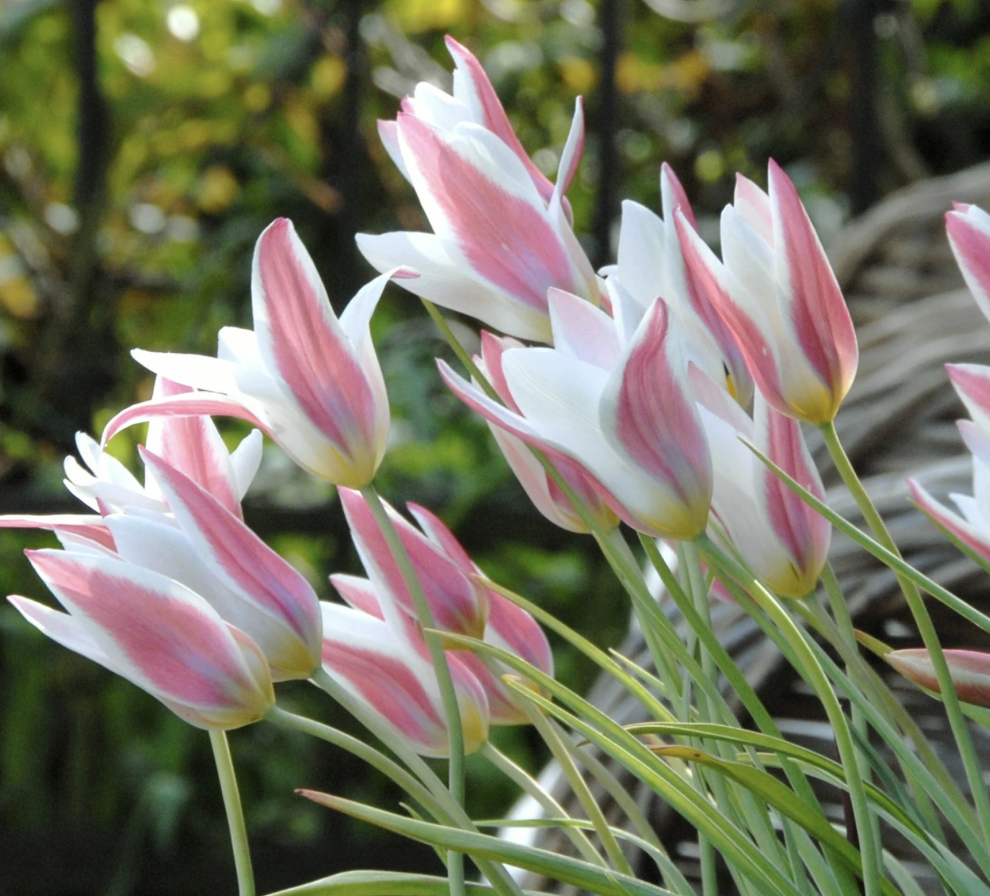
Tulipa clusiana ‘Lady Jane’
1 - Tulipa clusiana ‘Lady Jane
Height: about 25cm
Flowering: mid-spring, usually April
Colour: soft rose-pink outer petals edged in white; white inside, with a small yellow centre
‘Lady Jane’ has the charm of a striped sweet. Its narrow buds are elegant before they open, then spread into pale, starry flowers in the sunshine. It’s a lovely choice for edging a path or weaving through low ground cover, where its fine shape won’t be lost among taller plants
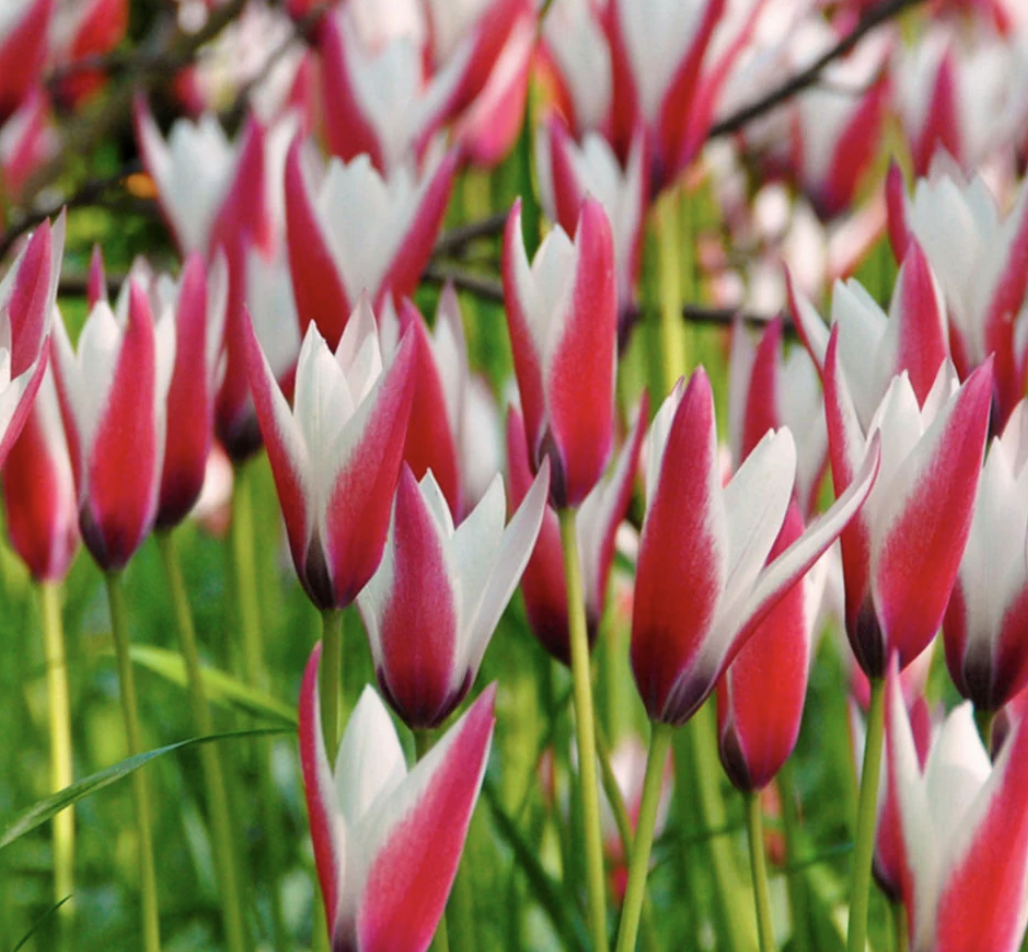
Tulipa clusiana ‘Peppermintstick’
2 - Tulipa clusiana ‘Peppermintstick’
Height: up to about 30cm
Flowering: mid-spring
Colour: white petals with cerise-red markings on the outside and a dark bluish centre within
‘Peppermintstick’ brings a sharper, more graphic stripe to the planting. Its flowers stay slender when closed, then open into bright stars on sunny days. It gives the collection height and a lively red-and-white accent.
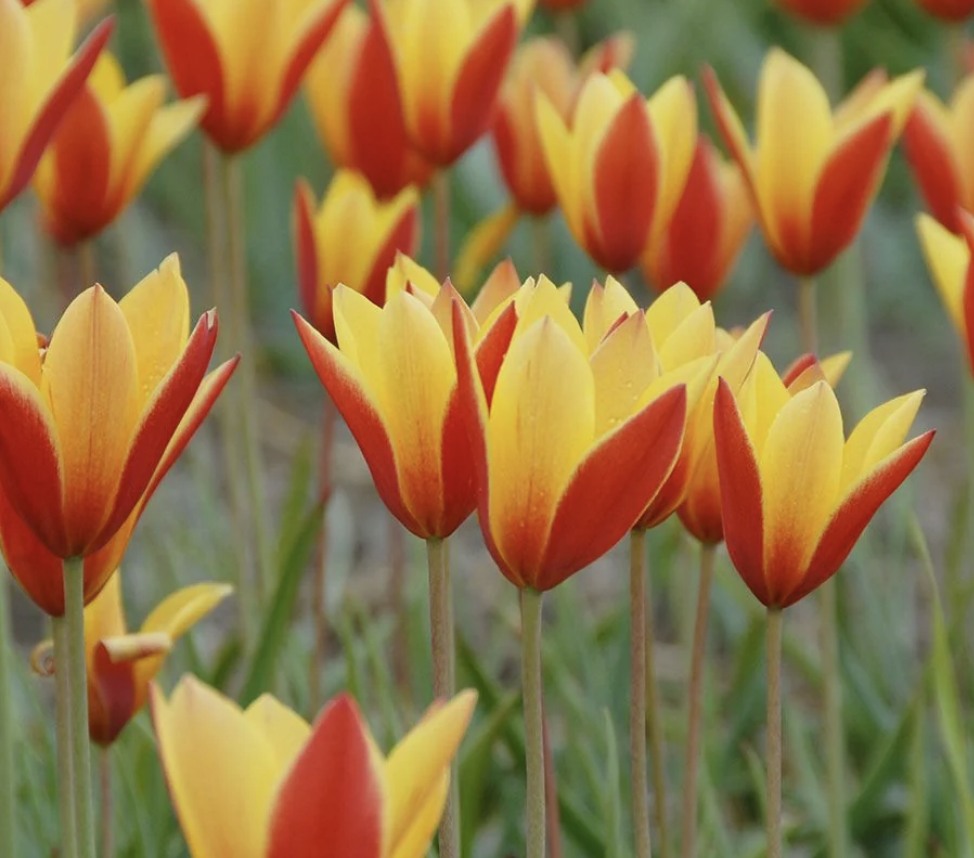
Tulipa clusiana var. chrysantha
3 - Tulipa clusiana var. chrysantha
Height: about 25cm
Flowering: April
Colour: red on the outside, golden yellow within
The flower changes character as it opens. Closed buds show more of their red exterior; in sunshine, they open to reveal bright yellow petals. Plant a group where the flowers can catch the light and you’ll get a little display that shifts through the day.
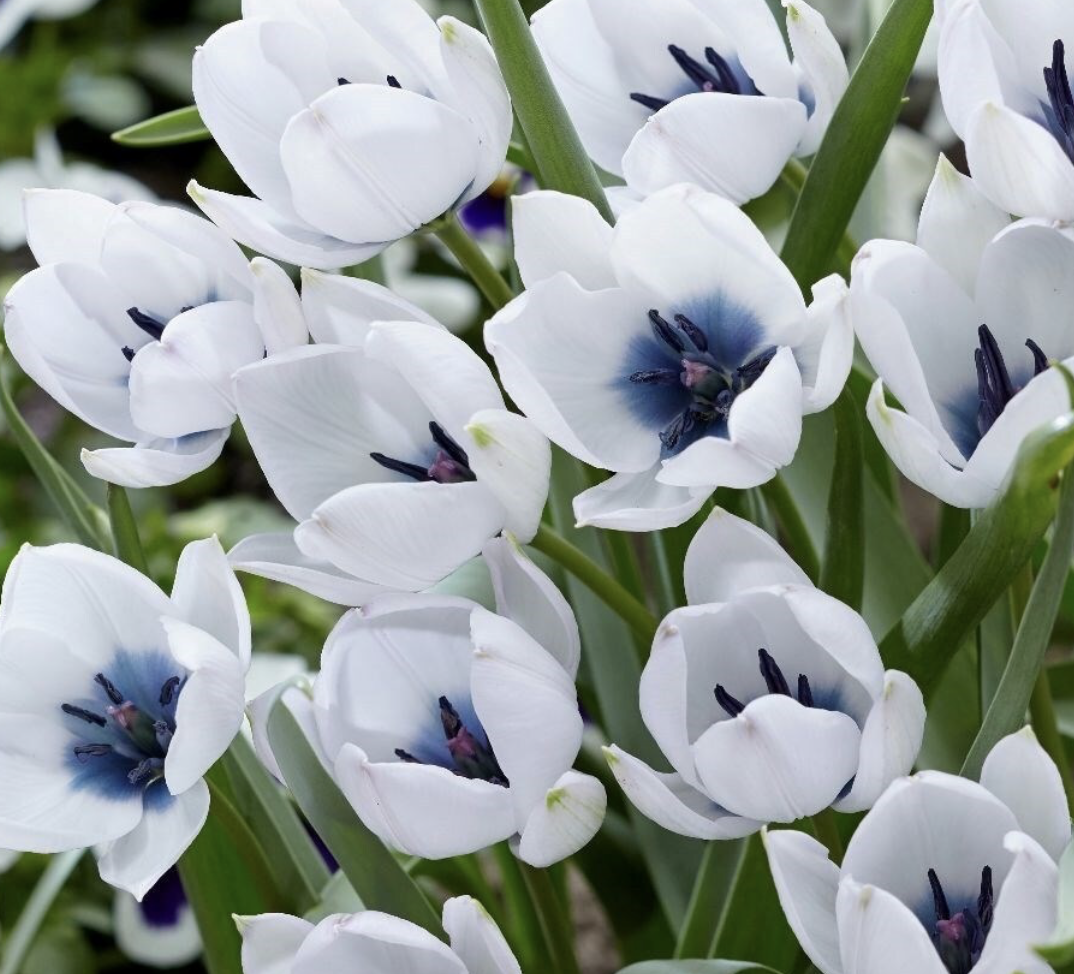
Tulipa humilis ‘Alba Caerulea Oculata’
4 - Tulipa humilis ‘Alba Coerulea Oculata’
Height: about 15cm
Flowering: March to April
Colour: white petals around a vivid blue to blue-black centre
This is the collection’s cool-toned surprise. The blue centre looks almost enamelled against the white petals, making ‘Alba Coerulea Oculata’ especially effective in a pot or near the edge of a path, where the detail is easy to see. It also provides a striking pause among the warmer pink, red and orange flowers.
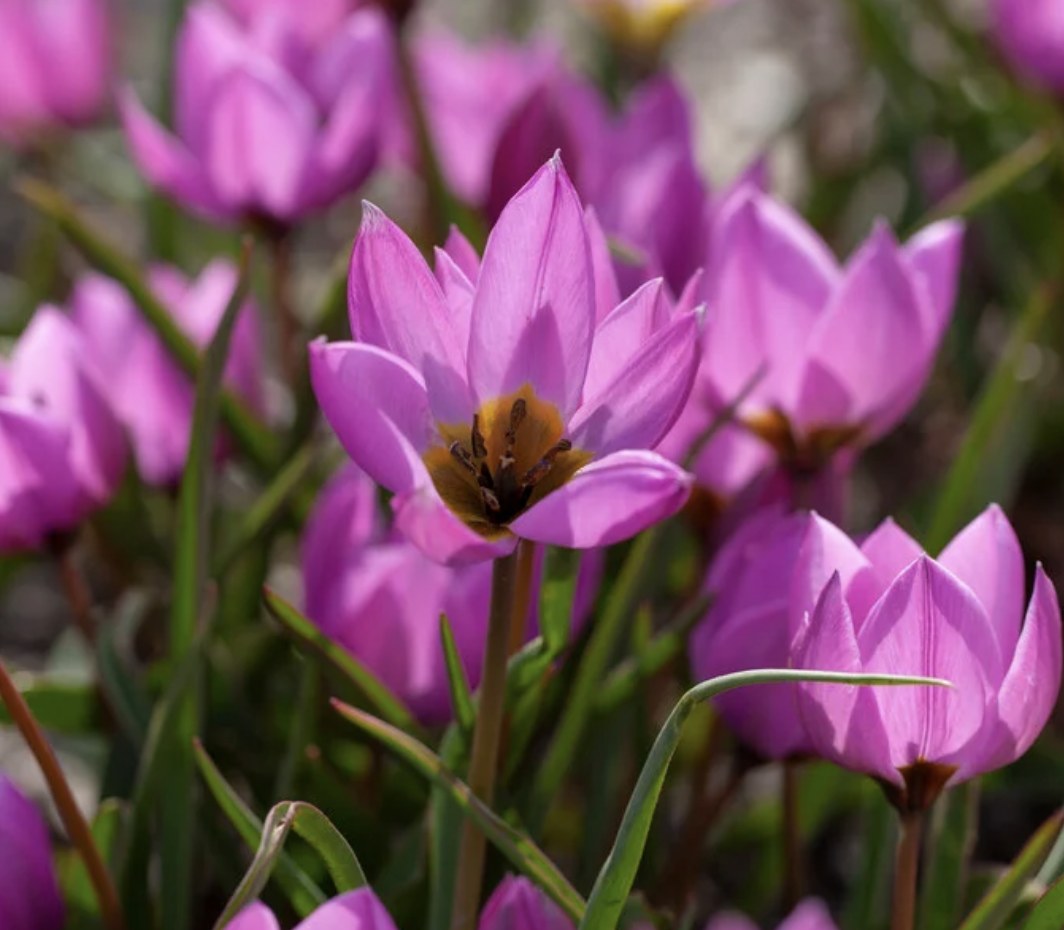
Tulipa humilis ‘Helene’
5 - Tulipa humilis ‘Helene’
Height: about 15cm
Flowering: early to mid-spring
Colour: violet-pink, opening from a cup into a star
‘Helene’ brings a softer pink-violet shade to the palette. Its low-growing, star-shaped flowers are a gentle counterpoint to the stronger markings of ‘Peppermintstick’ and ‘Alba Coerulea Oculata’. The RHS describes it as a good option for naturalising
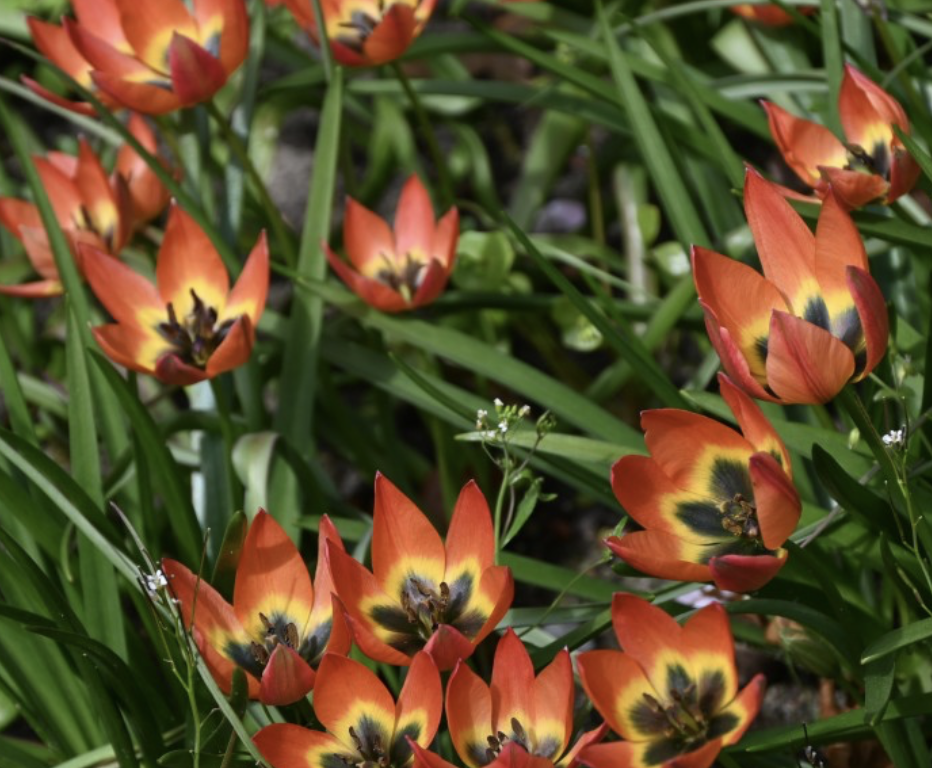
Tulipa humilis ‘Little Princess’
6 - Tulipa humilis ‘Little Princess’
Height: about 10–12.5cm
Flowering: early spring, often March to April
Colour: coppery orange, with a dark brown-black star-shaped centre edged in bright yellow
‘Little Princess’ may be tiny, but its multi-headed stems can carry clusters of three or four flowers. The coppery petals deepen as they mature, and the dark, yellow-edged centre gives each bloom a jewel-like finish. It’s also slightly scented
How to bring the colours together
For a naturalistic look, plant the tulips in loose groups and repeat each variety in more than one place. The pink-and-white clusiana tulips can thread through the planting, while the smaller humilis varieties form concentrated colour spots at the front. Use ‘Alba Coerulea Oculata’ as a bright focal point, and let ‘Little Princess’ and chrysantha add warm copper and gold.
They also work beautifully in containers. Choose a wide pot so you can plant generous clusters, and position it somewhere sunny where the flowers can open fully and be admired at close range.
Get the conditions right
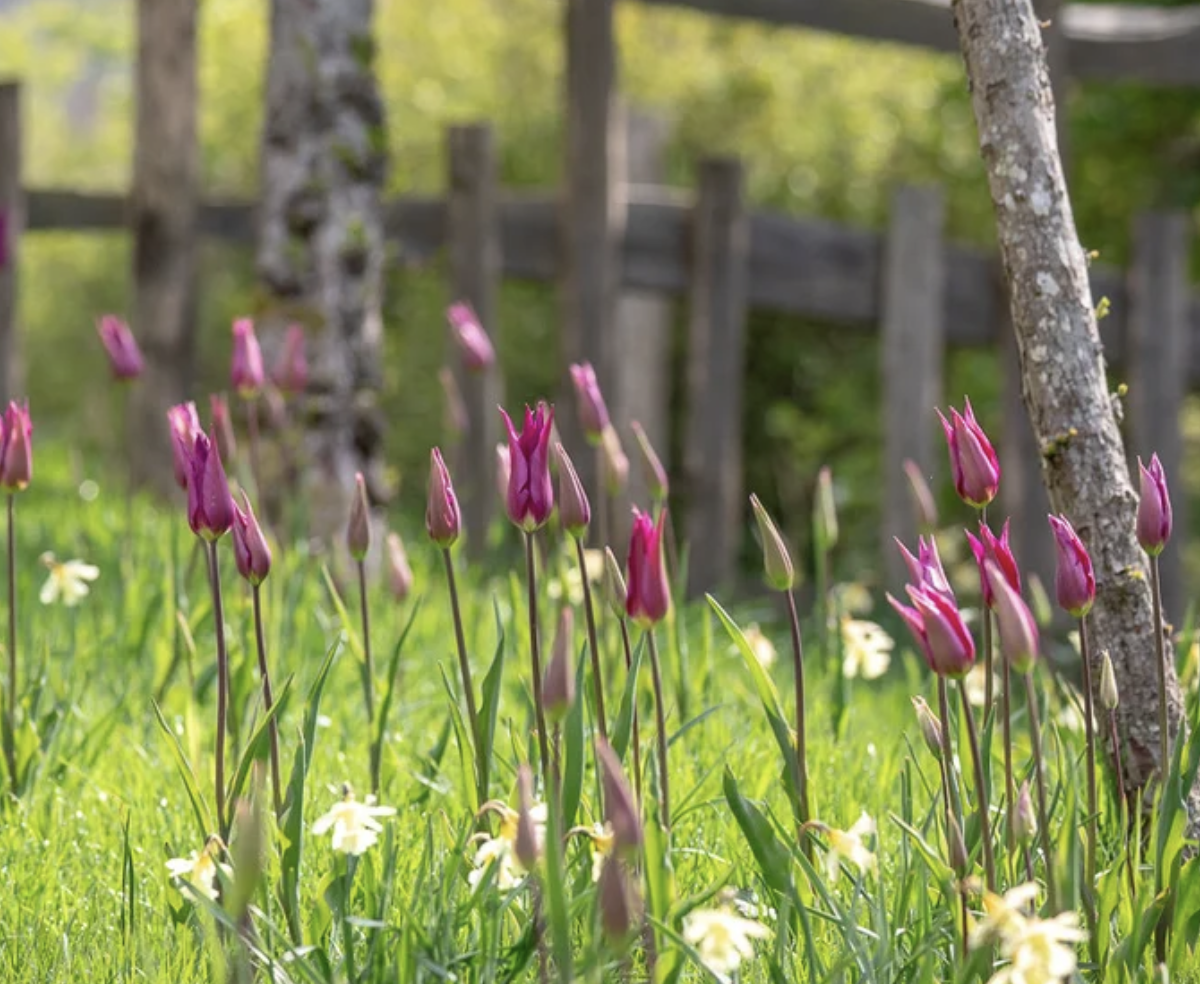
Give them the right conditions: Most species tulips appreciate full sun and excellent drainage. They are particularly successful in gravel gardens, raised beds, rock gardens and sunny borders.
Plant for longevity: Unlike many modern bedding tulips, species tulips can return and multiply when they are happy. Allow the foliage to die back naturally after flowering.
Rather than planting them in regimented rows, repeat them through the garden. Allow them to appear between grasses, perennials and stones, creating little moments of spring colour.
Conclusion: beautifully understated
Together, clusiana and humilis varieties make a spring display with real range: striped, star-shaped, white and blue, rose and violet, copper and gold. They may be small, but planted where they can be seen, they turn the garden into a little collection of living jewels. must for any garden creating a more naturalistic look and feel.
Other Articles you might like to read
Best Spring Bulbs for Small Gardens: creating a long flowering season