
Best Hellebores for the Winter Garden
When much of the garden has died back, hellebores bring colour, structure and quiet detail to shady borders. Their nodding flowers appear from winter into early spring, while their bold foliage helps the garden feel planted even on the greyest days. Here are my choices of some of the best Hellebores for your garden.
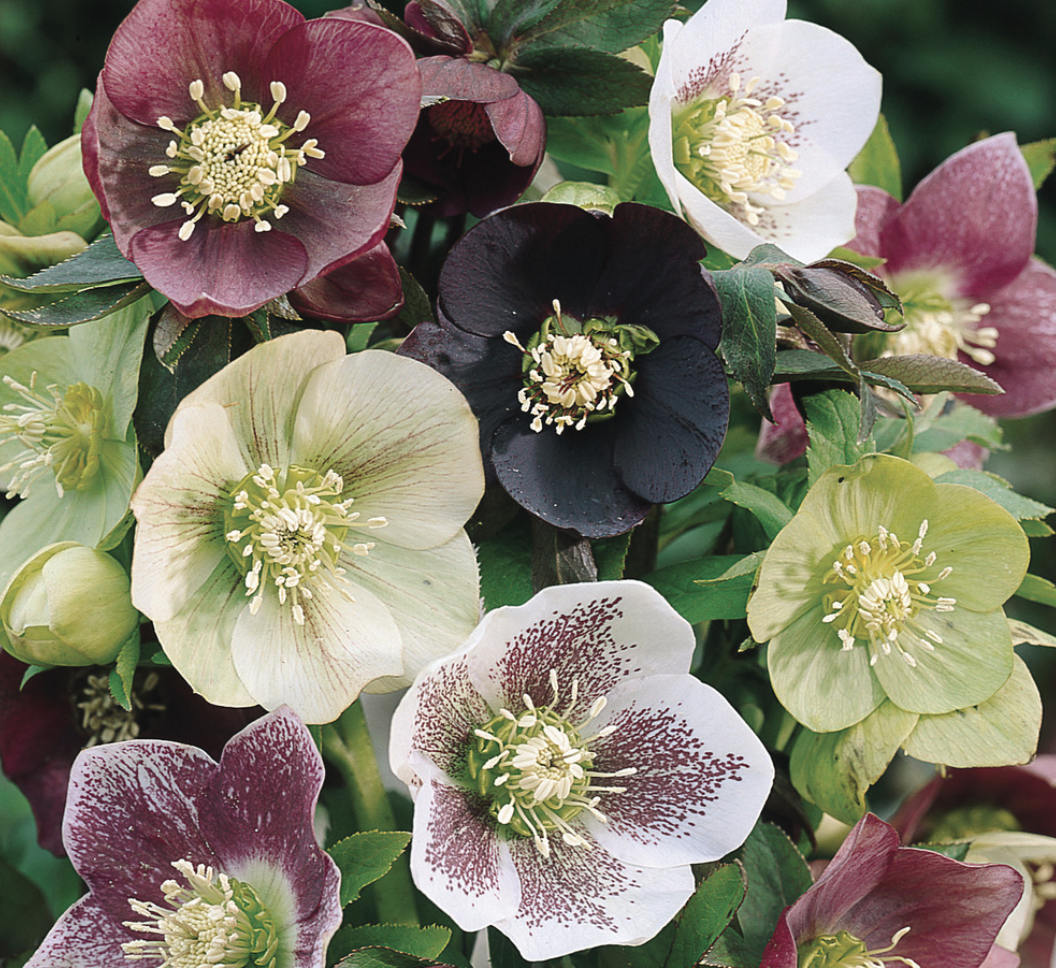
Helleborus x hybridus - huge variety of colours and form
Oriental Hybrids: for variety of colour
For a generous and colourful display, start with Helleborus × hybridus. These hardy, long-lived plants offer the widest choice of flower colour, from creamy white and soft pink to dusky plum and near-black. Some flowers are speckled or flushed; others are double, with layers of petals. Plant several together beneath deciduous trees or shrubs, where their flowers can be seen at close range. Combine with snowdrops and other evergreen foliage for the best impact. Some popular varieties to look out for include:
‘Double Ellen White’ - elegant, double white flowers.
‘Pretty Ellen White Spotted’ - white flowers marked with contrasting spots.
‘Double Ellen Pink Spotted’ — soft pink with a more playful speckled pattern.
‘Pretty Ellen Red’ — rich red for a stronger focal point.
‘Double Ellen Purple’ — deep purple, useful for adding depth to a shady border.
Harvington Double Yellow — a warm yellow option to brighten up a border.
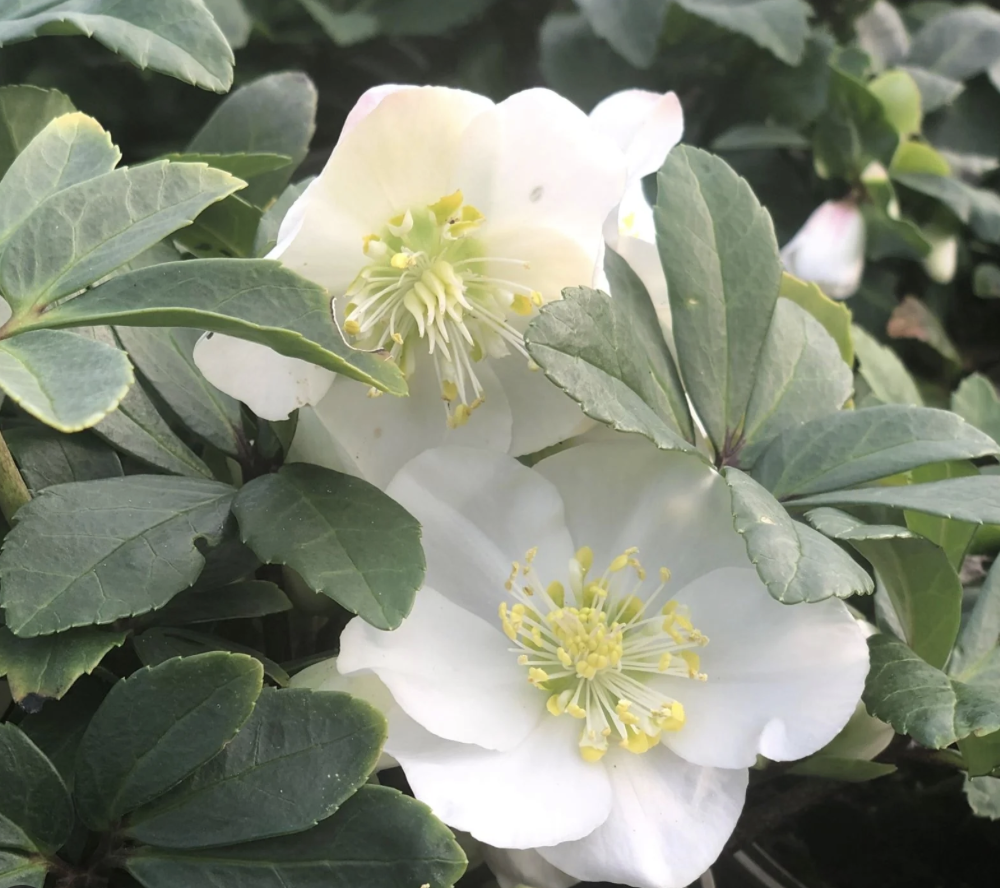
Helleborus niger - the Christmas Rose
Christmas Rose: Helleborus niger
The Christmas rose is prized for its clear white flowers, often opening in midwinter and gradually ageing to pink. It makes a lovely feature near a path or doorway, where its flowers can be appreciated up close. It needs good drainage, especially in winter, so avoid planting it in cold, waterlogged soil. A sheltered position or a pot in a bright, protected spot can suit it well.
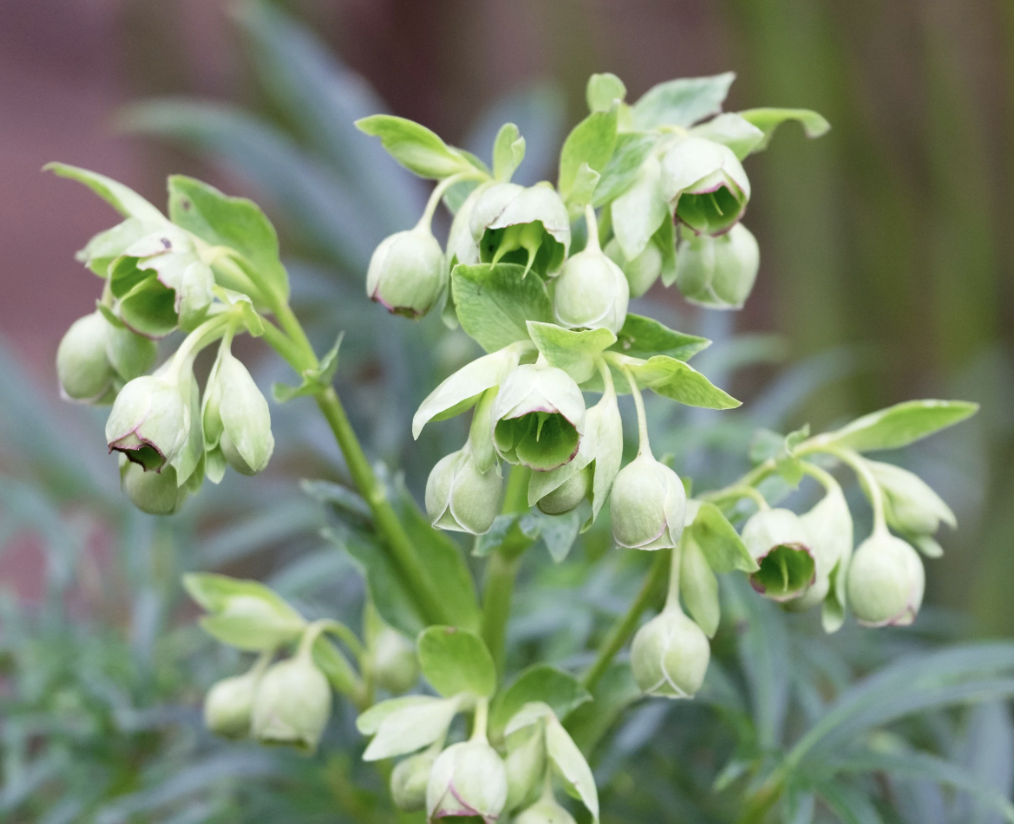
Helleborus foetidus
A sculptural evergreen: Helleborus foetidus
For foliage and form as well as flowers, Helleborus foetidus is hard to beat. Its finely divided leaves create a strong, architectural shape, topped by clusters of small lime-green bells. It works particularly well among ferns, grasses and shade-loving perennials, where its upright habit gives the planting contrast. Despite its common name, the leaves only smell when crushed.
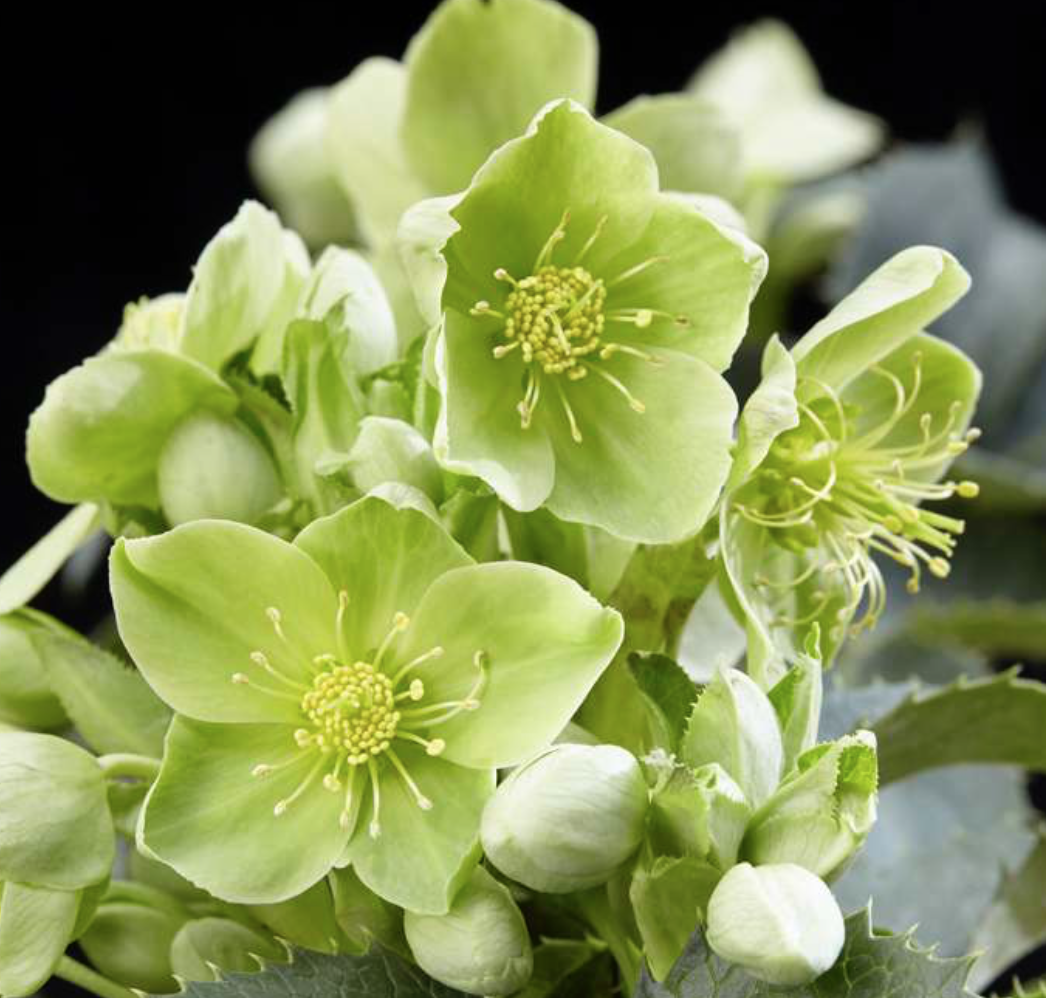
Helleborus argutifolius
Holly-leaved Hellebore: Helleborus argutifolius
This is a larger, bolder choice, with glossy, sharply toothed leaves and clusters of pale green flowers. Use it where you have space for its substantial presence, or as an evergreen anchor among softer, lower planting. It brings a Mediterranean feel to a sunny, sheltered border and gives the winter garden lasting structure.
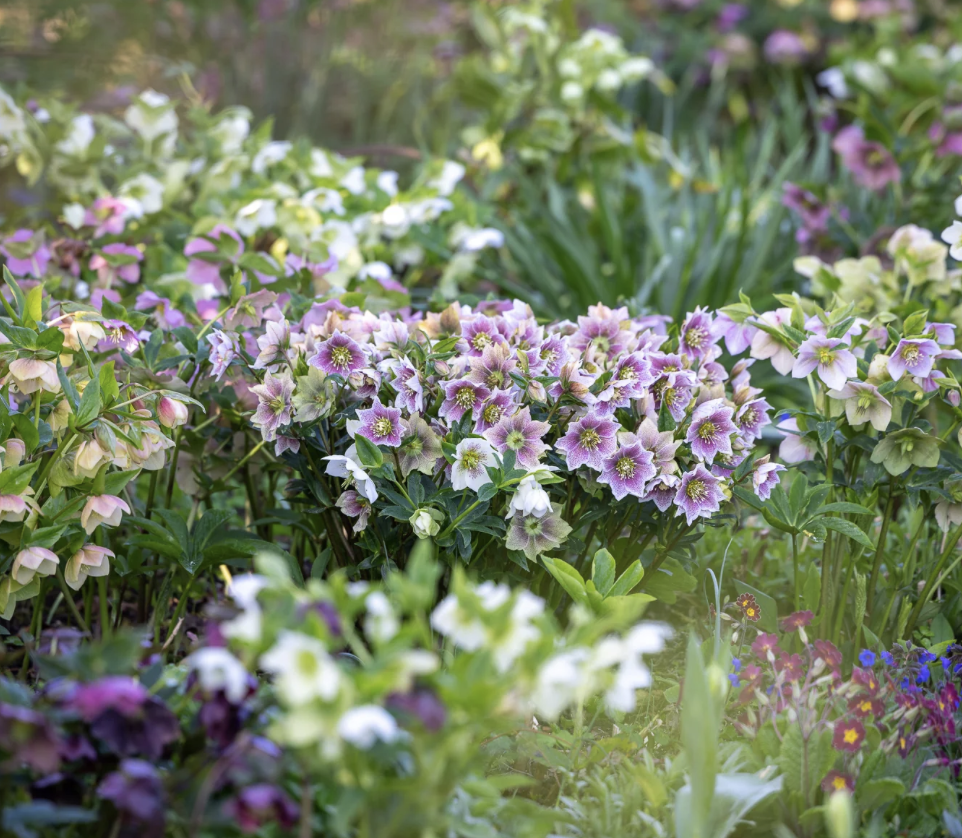
Hellebores brighten up every winter garden
Conclusion: plant for winter colour & structure
Most hellebores thrive in dappled shade and fertile, moisture-retentive but well-drained soil. Plant them where their flowers can be seen from a path or window, and combine them with snowdrops, cyclamen, ferns and evergreen ground cover. Cut back old leaves on Oriental hybrids in late winter or early spring to reveal the flowers, and remove any damaged foliage. With the right position, hellebores bring colour and structure to the garden when they are most needed.
Other Articles you might like to read
Species Tulips: the best naturalising Tulips for your garden