
A perennial border doesn’t have to lose its appeal when the flowers fade. Many plants develop seedheads that hold their shape through autumn and winter, bringing sculptural forms, subtle colour and movement to the garden. Left standing, they can also provide food for birds and shelter for insects.
As a garden designer, I consider the whole life of a plant: its summer flowers, the structure it leaves behind, and how it relates to its neighbours. These six perennials offer a range of seedhead shapes for a border that carries its interest into winter
Designing the Winter Garden with Summer Perennials
1 - Rudbeckia - dark domed cones
Rudbeckias leave distinctive dark cones on sturdy stems. Rudbeckia fulgida var. deamii and ‘Goldsturm’ are useful in sunny borders, where their seedheads rise above surrounding plants and catch the frost.
I use their rounded forms to punctuate a planting scheme. Repeating them in small groups creates a visual rhythm, while planting them beside fine grasses or airy sanguisorba highlights the contrast between bold and delicate shapes. Position them where the dark cones can be seen against a pale wall, gravel or winter sky.
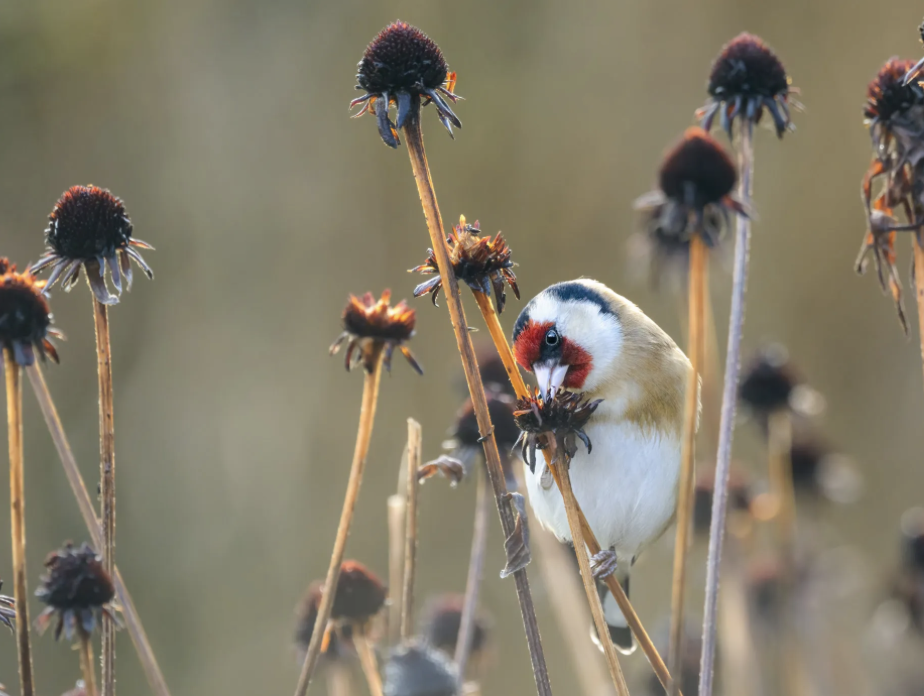
Rudbeckia seedheads - great food source for finches in the depths of winter
2 - Echinacea: spiky silhouettes
The raised central cones of echinaceas remain striking after the petals have fallen. Echinacea purpurea ‘Magnus,’ ‘Rubinstern’ and ‘White Swan’ offer strong, upright stems.
Echinacea works well in the middle of a sunny border, where its seedheads can sit above lower plants without blocking the view. I often combine it with grasses and sedums: the fine grass plumes soften the upright stems, while broad sedum heads give the planting a lower, grounded layer.
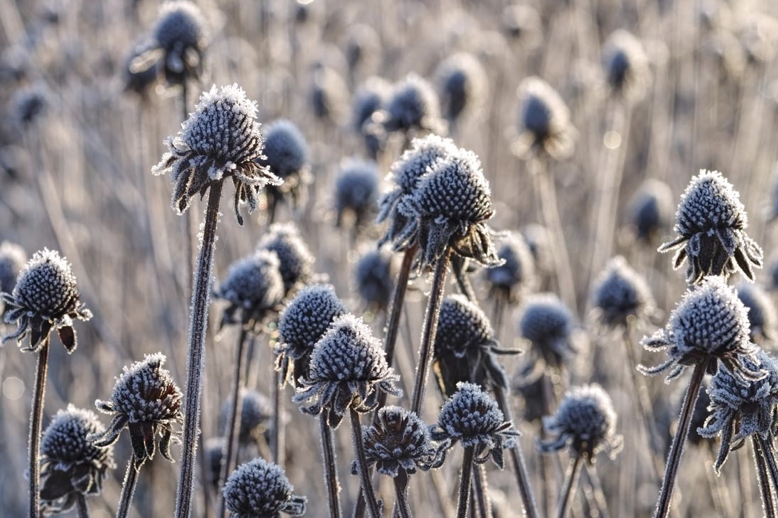
Echinacea seedheads providing structure through the winter months
3 - Eryngium: sculptural, silvery heads
Eryngiums have intricate, spiny bracts around their flowerheads. Eryngium planum and ‘Blue Hobbit’ are compact choices for sunny, well-drained borders. As the heads fade, their blue-grey tones become silvery and continue to catch the light. Eryngium yuccifolium and agavifolium deliver great height and form across the winter months
I use eryngium to bring sharper detail into a planting scheme. Its crisp forms sit well beside soft grasses. Place it where the winter sun can pick out the bracts, and avoid crowding it with plants that will hide its distinctive shape
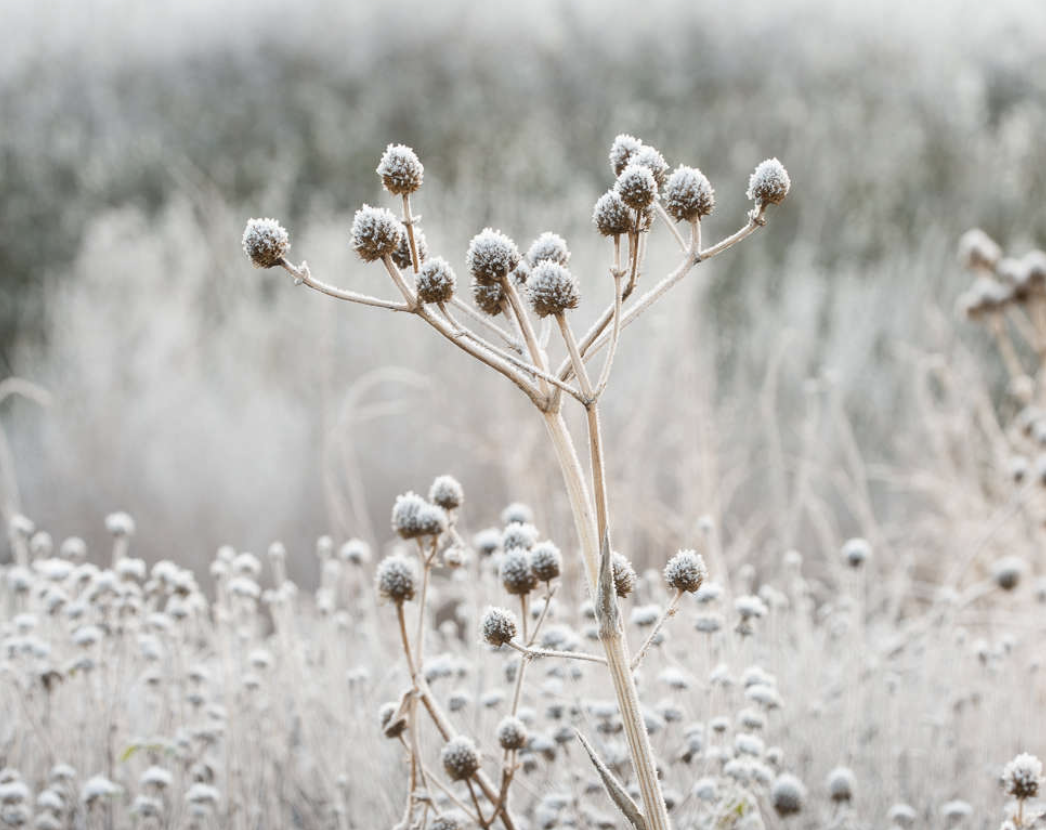
Eryngium yuccifolium
4 - Sedums: broad, lasting flowerheads
Sedums, now known as Hylotelephium, hold their broad flowerheads long after flowering. ‘Herbstfreude’ (also known as ‘Autumn Joy’) turns from pink to russet as the season advances, while ‘Matrona’ combines dusky foliage with sturdy stems and muted flowerheads.
Their flat-topped forms are useful at the front or middle of a border, where they provide a calm, horizontal note among upright stems. I like to repeat them in loose groups, allowing their warm winter colour to link with grasses and the fading tones of other perennials. Leave the stems standing through winter for structure and potential insect shelter
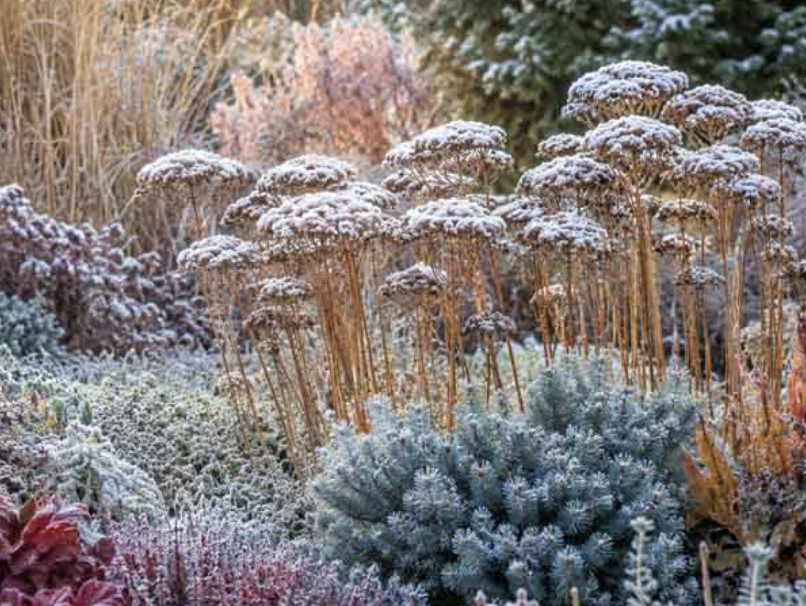
The flat seedheads of Sedums provide a calming, horizontal form
5 - Sanguisorba: lightness and movement
Sanguisorbas bring height without heaviness. Their small, bobbing seedheads sit on slender stems, making them a natural choice for relaxed, naturalistic borders. Sanguisorba officinalis ‘Tanna’ has compact, dark-red heads, while S. tenuifolia‘Alba’ produces airy white bottlebrush flowers that mature into delicate seedheads.
I use sanguisorba to weave through a planting rather than create a solid block. Its fine structure lets the eye travel through the border, and its movement in a breeze adds life on still winter days. It pairs particularly well with the stronger silhouettes of rudbeckia and echinops.
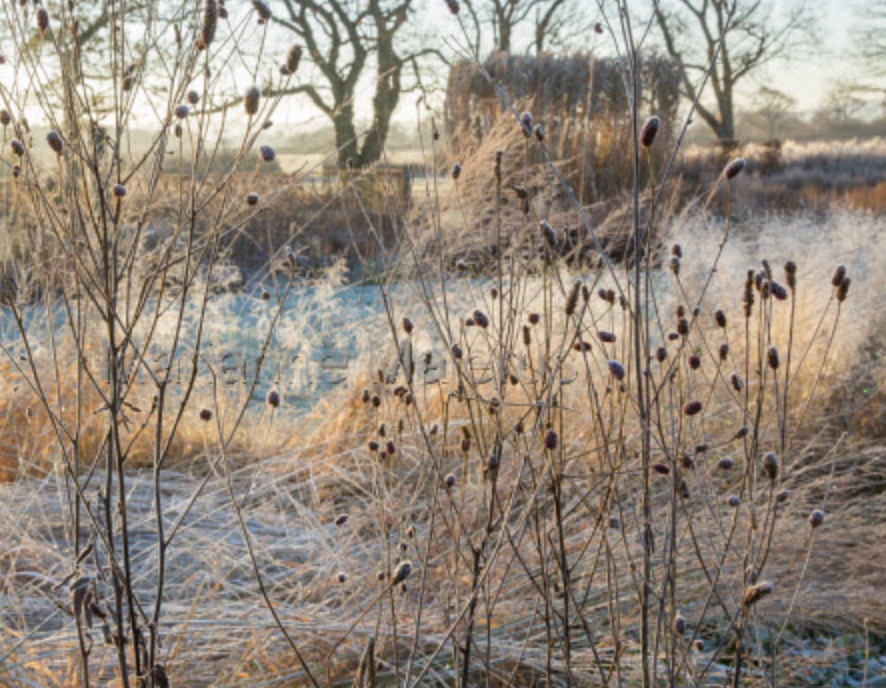
Sanguisorba - dots weaving through the grasses
6 - Echinops: spherical, spiky forms
Echinops, or globe thistle, produces spherical flowerheads that dry into dramatic spiky forms. Echinops ritro ‘Veitch’s Blue’ holds its shape well and has a strong presence in a sunny border.
Its round heads create a useful contrast with vertical grasses and finer plants such as sanguisorba. I use echinops where the planting needs a clear focal shape, repeating it at intervals so the globes feel part of the overall composition. It suits open, sunny positions where the stems can stand out against a simple backdrop
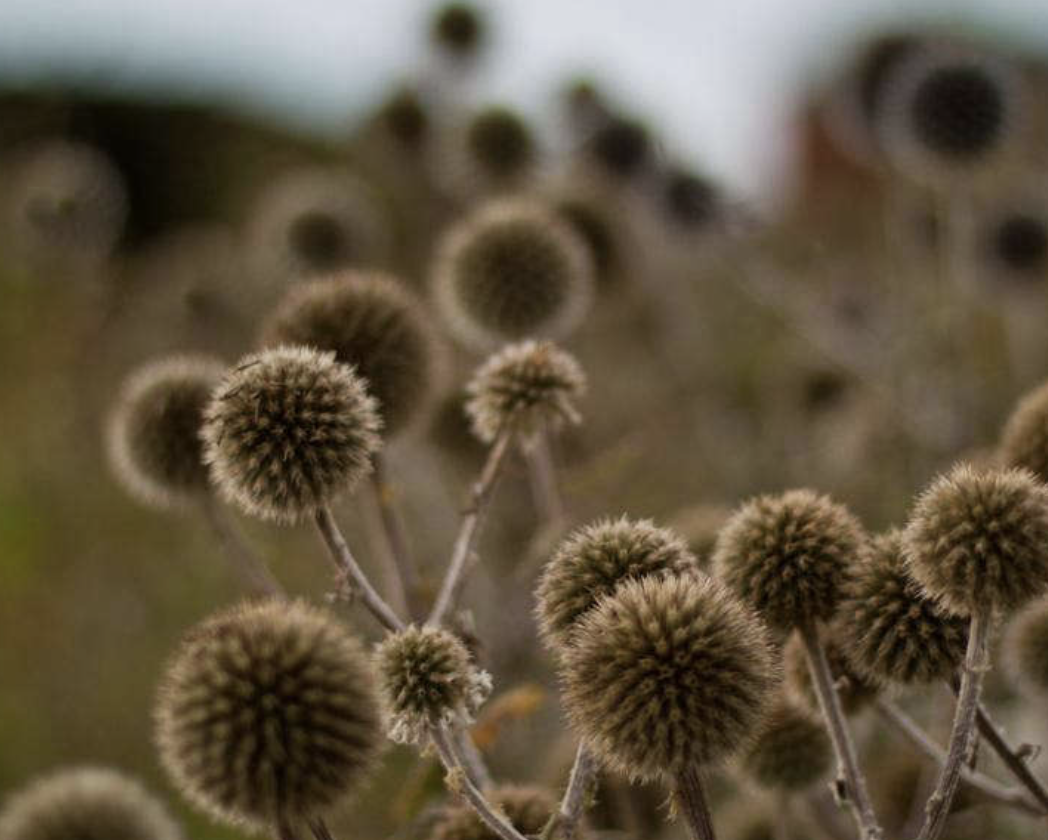
The winter garden can be a thing of beauty
7 - Phlomis - tiered whorls on strong stems
Phlomis offers a different kind of winter structure. Its flowers form tiered whorls around upright stems, then dry into distinctive, button-like seedheads. Phlomis russeliana has soft yellow flowers and broad leaves, while P. tuberosa‘Amazone’ brings taller stems and lilac-pink flowers.
I use phlomis to add strong vertical lines and a repeated, architectural pattern through a border. The dried whorls look particularly effective against grasses or evergreen planting, and their robust stems hold up well in winter weather. Leave them standing until early spring, when new growth begins to emerge.
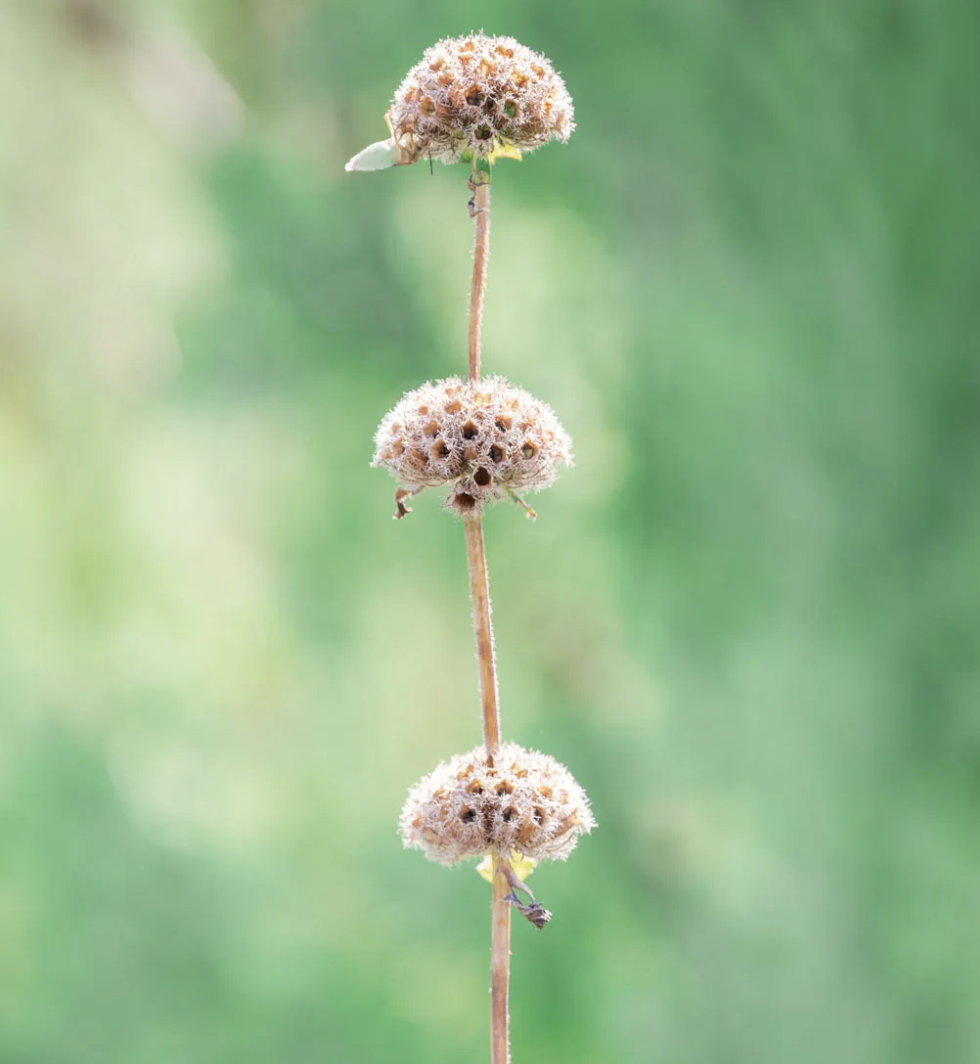
Phlomis russeliana - strong, vertical stems with whorls of flowers
8 - Hydrangea - long lasting flowerheads
Hydrangeas bring generous, lasting forms to the border. The flowerheads of Hydrangea paniculata cultivars such as ‘Limelight’ and ‘Kyushu’ fade through soft greens, pinks and russets, while many mophead hydrangeas keep their papery blooms through winter.
I use hydrangeas as larger anchors within the planting, balancing their generous flowerheads with finer perennials such as sanguisorba and grasses. Their dried blooms are especially effective where they catch low winter light. Leave them in place over winter and prune in spring, as the old flowerheads can help protect the buds beneath.
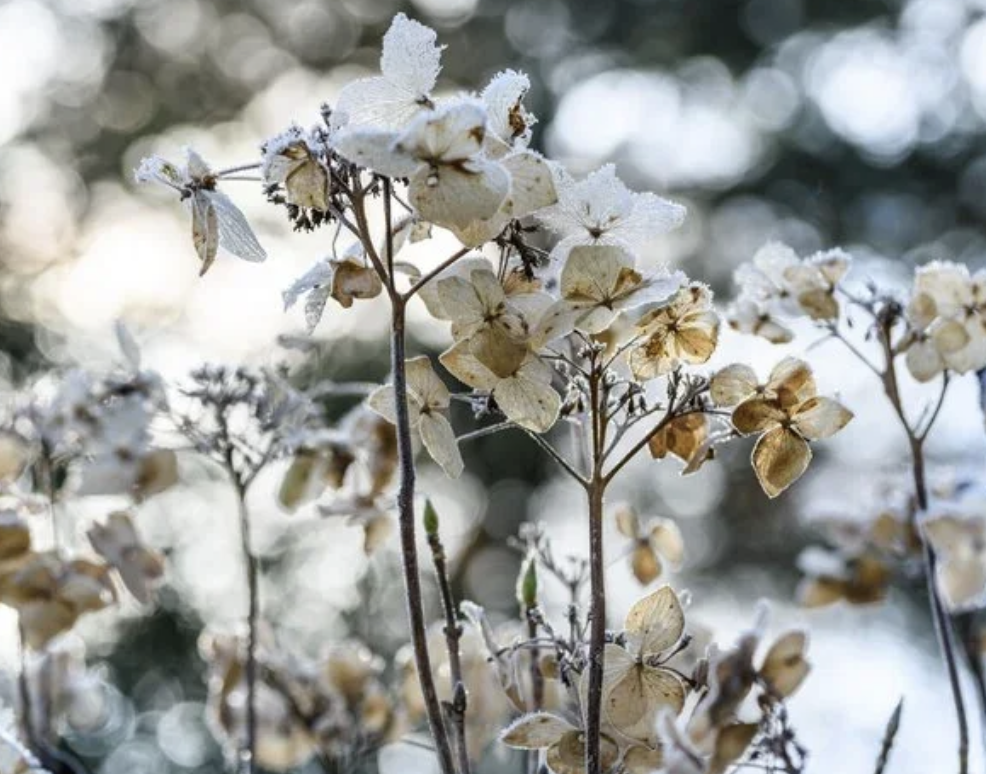
Hydrangea macrophylla - transparent, sturdy seedheads
Designing you winter border with seedheads
For a considered winter display, combine different shapes and heights: dark rudbeckia cones, upright echinacea, fine sanguisorba, broad sedum heads, spherical echinops, intricate eryngium, tiered phlomis and the generous flowerheads of hydrangea. Repeating plants through the border helps the composition feel connected; grasses add movement and link the different forms.
Leave healthy stems and flowerheads standing until late winter or early spring. They can offer shelter for insects and, depending on the plant, food for birds, while giving the garden structure after flowering has finished. As new growth appears, cut back the old stems and let the next season take over.
Conclusion: a border with a second life
Seedheads let a perennial border keep its character long after summer flowering has finished. By combining bold cones, fine stems, tiered forms and papery flowerheads, you can create a winter composition with depth, movement and changing colour. Adding grasses and shrubs gives extra excitement.
When designing, I look for plants that work together in both seasons: flowers that make a strong summer display, and forms that still earn their place in winter. Leave healthy stems standing until early spring, then cut them back as fresh growth emerges. The garden will have carried its structure through winter and be ready to begin again.
Enjoy the structural form of seedheads throughout the winter months. The days of chopping a perennial border to the ground in the autumn are thankfully, long gone.