
Ornamental grasses bring movement, texture and shape to a garden throughout the year. Some are evergreen in winter; others fade into stems and seedheads that catch frost and low sunlight.
As a garden designer, I look at where a grass grows naturally for clues to its preferred conditions. The native habitat is a useful guide, though garden cultivars may tolerate a wider range. Grasses add movement, texture and light play across the seasons and when combined with perennials create a stunning naturalistic look and feel.
Designing with Grasses for the Winter Garden
1 - Calamagrostis x acutiflora ‘Karl Forester’
Native background: This is a garden hybrid of European feather reed grasses.
Height and spread: Around 1.2–1.5m tall and 60cm wide.
Flowering: Upright plumes appear in early summer, fading to golden brown and persisting into winter.
Sun: Full sun is best; it will tolerate light shade.
Soil: Adaptable to soil type, but prefers fertile soil that stays reasonably moist.
Drought: Will tolerate dry periods once established.
A stunning early season grass flowering from early summer. Its upright form brings order to a loose perennial border. Repeated in groups, it creates rhythm through a border. Prized for its upright form which persists through the winter months.
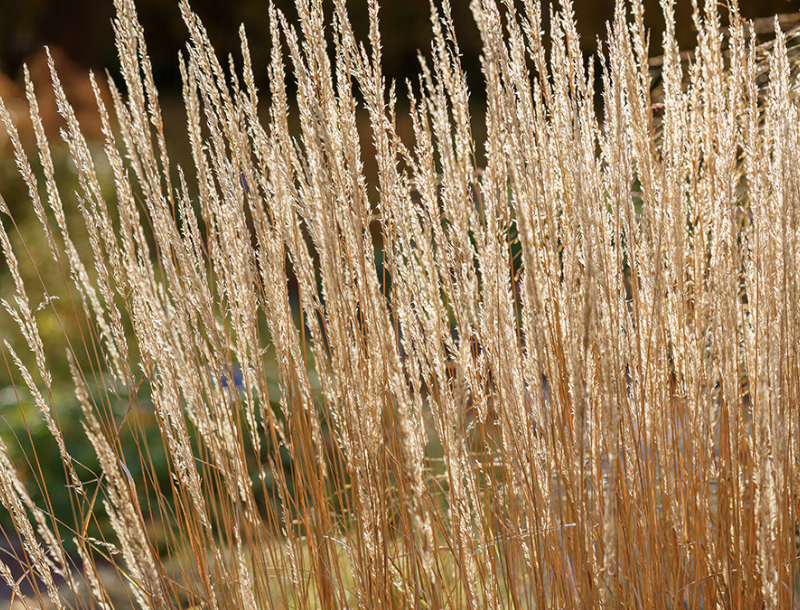
Calamagrostis ‘Karl Forester’ - stunning upright form, flowering from mid May
2 - Miscanathus sinensis ‘Morning Light’
Native background: The species is native to East Asia, including China, Japan and Korea.
Height and spread: Around 1.2–1.5m tall and 60–90cm wide.
Flowering: Feathery plumes usually appear in late summer or autumn and persist as pale seedheads.
Sun: Full sun encourages the best flowering.
Soil: Adaptable to most garden soils; prefers moist but well-drained ground.
Drought: Reasonably tolerant once established, but performs best with some moisture.
It's fine, arching leaves bring softness and a silvery quality. Flowering from August onwards bringing a light, airy softness to the Autumn/Winter garden. Place it where winter sun can illuminate the plumes, or behind rudbeckia and echinacea seedheads. Unlike other Miscanthus, the feathery flower plumes persist right through winter.
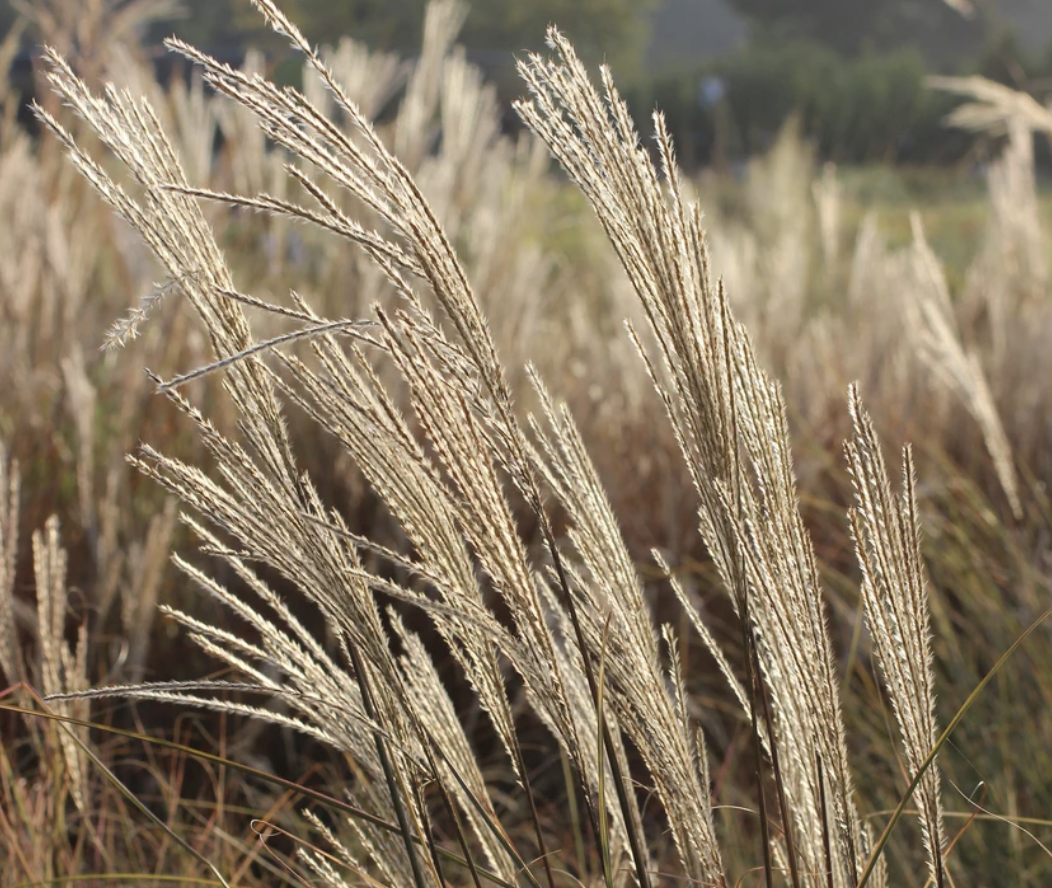
Miscanthus sinensis ‘Morning Light’
3 - Molinia caerulea subsp. arundinacea ‘Transparent’
Native background: Molinia caerulea is native to Britain and Europe, growing in damp grassland, moorland and other open habitats.
Height and spread: Flower stems can reach 1.5–2m; the foliage clump is about 60–90cm wide.
Flowering: Airy flowerheads appear in summer and fade to golden tones in autumn.
Sun: Sun or partial shade.
Soil: Prefers moist soil, including heavier ground.
Drought: Prefers moist soil
Its open structure lets the eye travel through a border. Plant it in drifts for a soft veil of stems that catches the light without blocking views. As a British native, this species prefers damper soil but is will thrive in heavier soils and partial shade. Its long flowering plumes add a purple hue to the border in the Autumn and look amazing combined with Salvias, Echinops, Sanguisorba and other sturdy perennials.
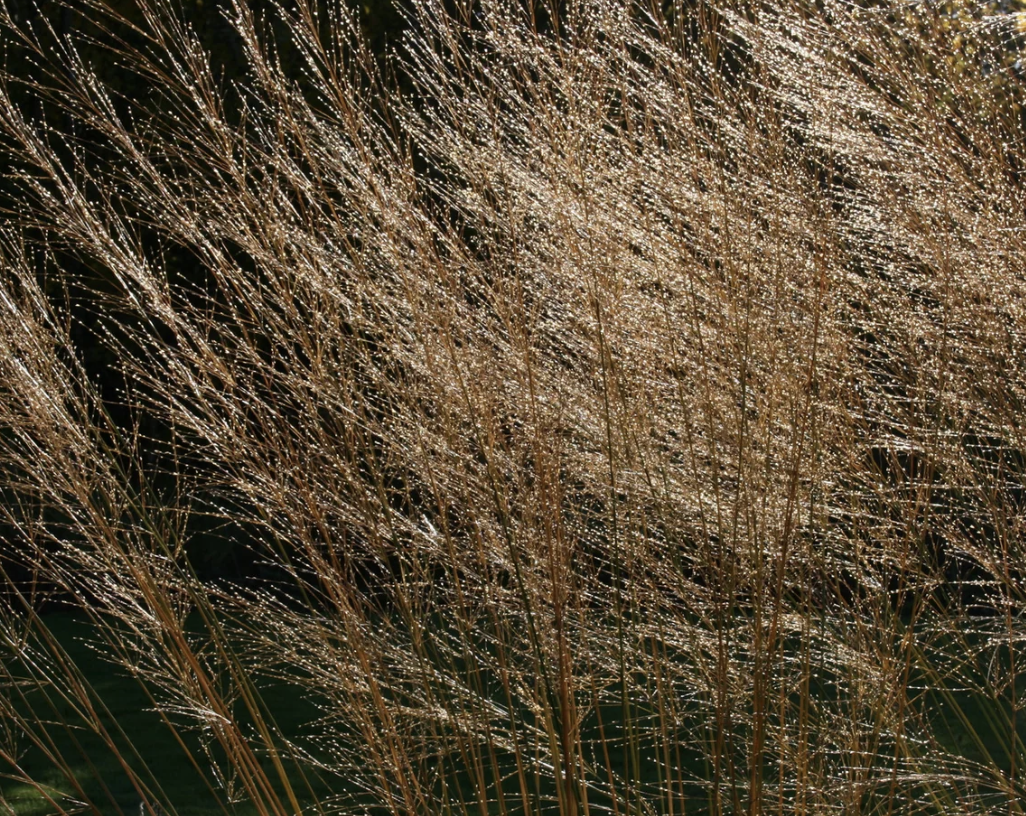
Molinia caerulea ‘Transparent’ - a British native
4 - Deschampsia cespitosa
Native background: Tufted hair grass is native to Britain and widely found in temperate regions, often in damp meadows and beside streams.
Height and spread: Around 60–80cm tall in flower, with a foliage clump about 45–60cm wide.
Flowering: Fine, cloud-like flowerheads appear from early to midsummer and dry to pale straw-coloured seedheads.
Sun: Sun or partial shade.
Soil: Prefers reliably moist soil and tolerates heavier ground.
Drought: Prefers moist soil
Its shorter stature makes it ideal for weaving through a border, where its delicate, open, airy texture contrasts with bolder perennials and shrubs. A perfect grass for creating softness in a border with heavier, more moist soils
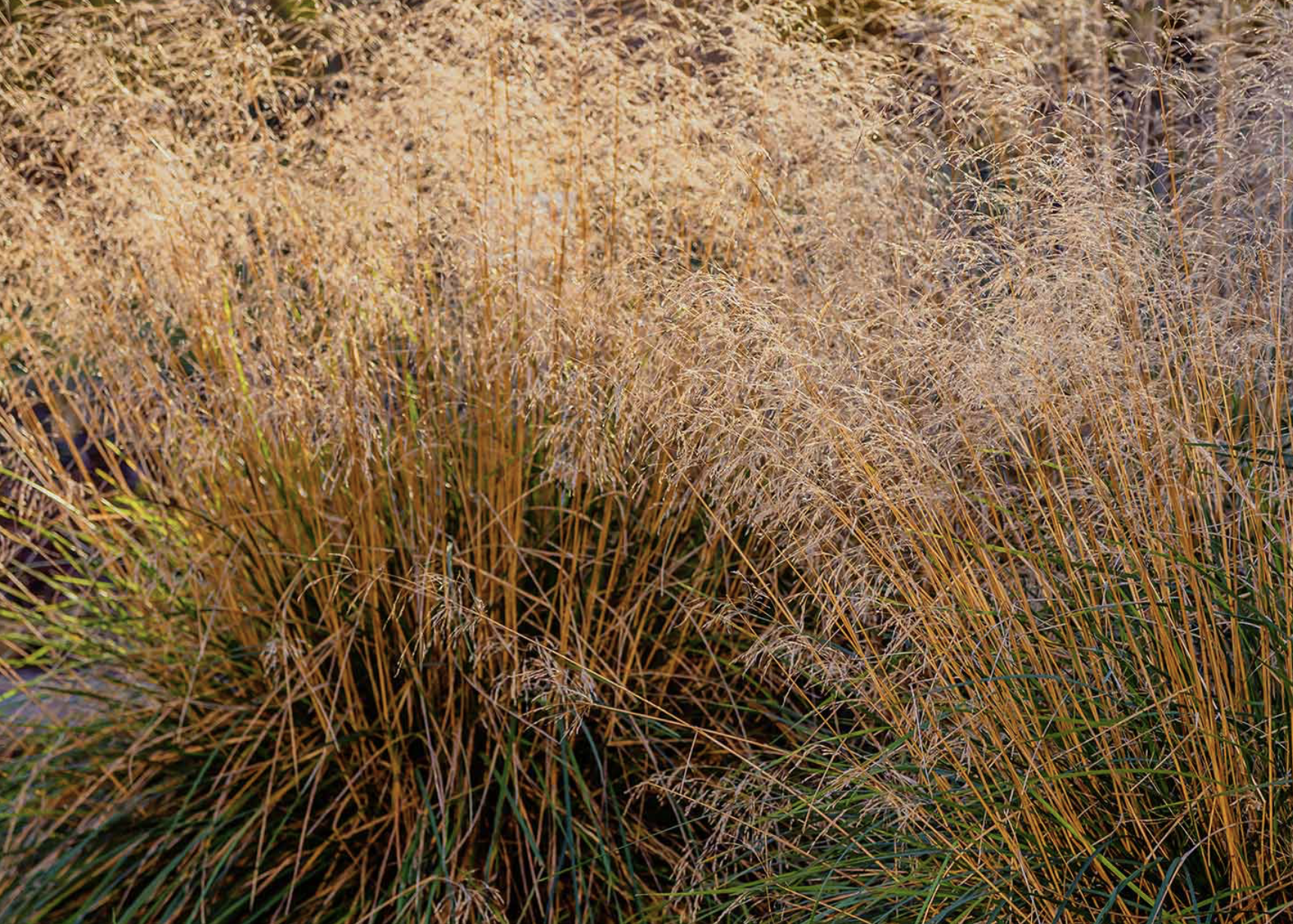
Deschampsia cespitosa flowing through the perennials in a border
5 - Stipa gigantea
Native background: Golden oats is native to the Iberian Peninsula and grows naturally in open, dry habitats.
Height and spread: Flower stems reach about 1.5–2.5m; the foliage clump is 60–90cm wide.
Flowering: Tall, golden flowerheads open in early to midsummer and retain their airy shape into winter.
Sun: Full sun.
Soil: Best in well-drained, average to light soil.
Drought: Good once established. Perfect for a gravel garden.
One of the most impressive grasses used by garden designers. Use it as a focal point beside a path or entrance or strategically placed through a border. Give it space so its open seedheads can be seen against the sky or a darker backdrop. A grass that has long, sturdy flowering plumes which persist through the winter. Perfect for a gravel garden or drought tolerant, naturalistic planting scheme.
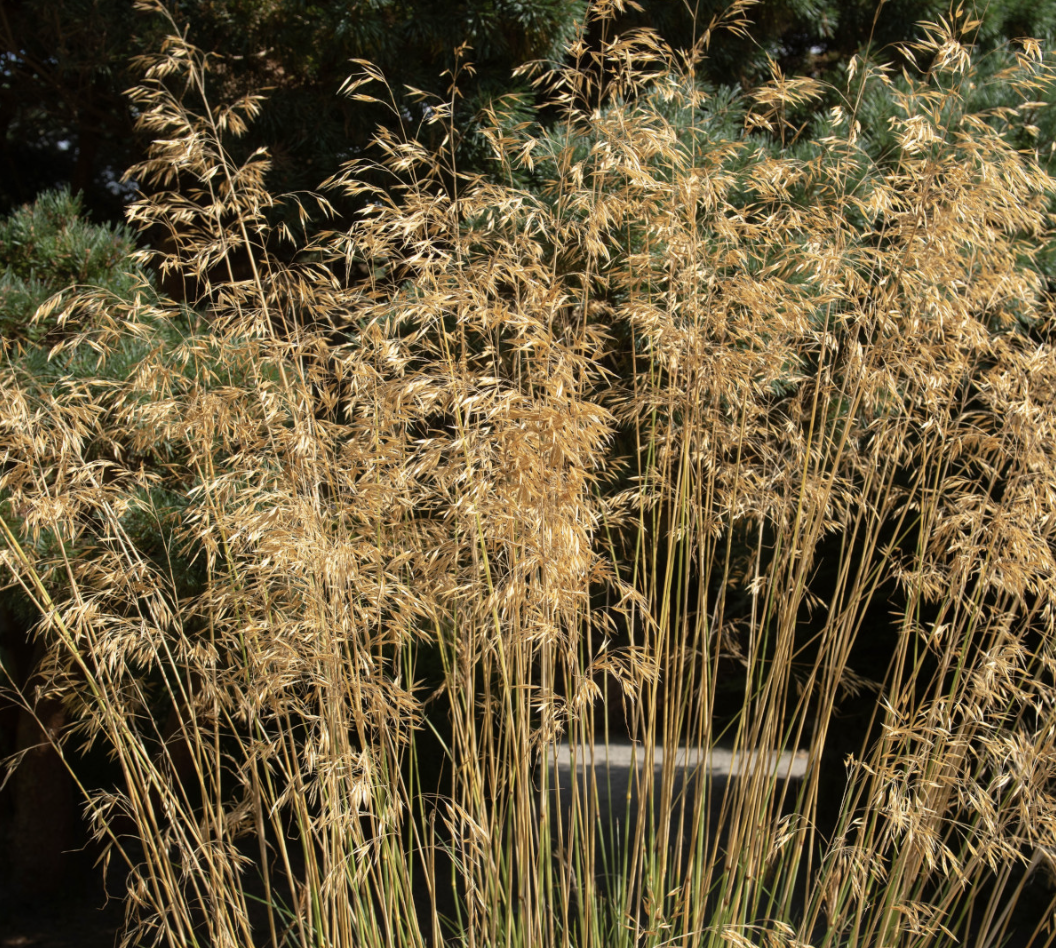
Majestic flower plumes of Stipa gigantea
6 - Stipa tenuissima
Native background: This feather grass is native to dry grasslands in parts of Mexico and the south-western United States.
Height and spread: Around 50–60cm tall and wide.
Flowering: Soft, feathery plumes appear in summer and can remain attractive into winter.
Sun: Full sun.
Soil: Light, well-drained soil; it dislikes heavy, wet ground.
Drought: Tolerant once established.
Its fine leaves and flowing plumes bring softness to sunny borders and gravel gardens. Use it in small groups, repeated between perennials to connect different areas. Perfect for weaving through a dry garden border. Often short lived but readily self seeds around delivering a unique naturalistic feeling. Known an ‘Pony Tails’ and you can understand why!
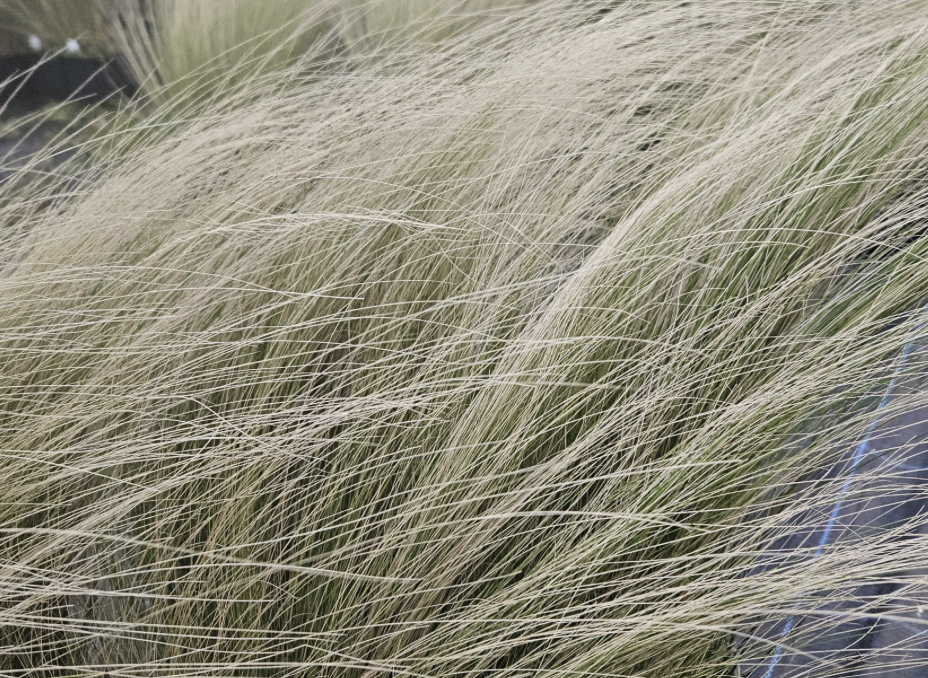
Stipa tenuissima - ‘Pony Tails’
7 - Anemanthele lessoniana
Native background: Pheasant’s tail grass comes from New Zealand, where it grows in open habitats.
Height and spread: Around 60–90cm tall and wide.
Flowering: Airy flowerheads appear in late summer and early autumn.
Sun: Sun or light shade; shelter can help in colder areas.
Soil: Well-drained soil is important.
Drought: Tolerates dry periods once established
Its foliage develops warm orange, red and bronze tones which can be beautifully combined with perennials picking up similar colour tones. As an evergreen or semi-evergreen grass, it keeps colour and texture close to the ground after deciduous grasses have died back. Again, a perfect grass to weave through a border of perennials in well drained soils.
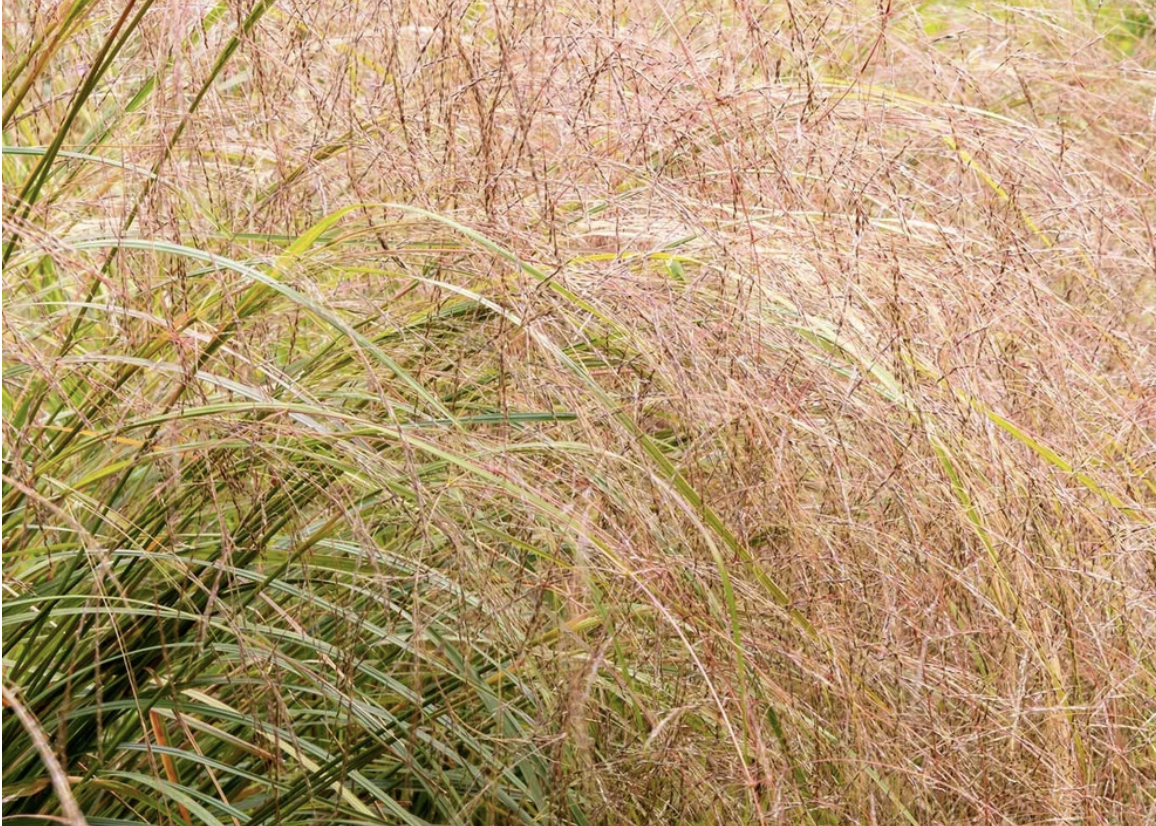
Anemanthele lessoniana - red, orange and bronze hues
8 - Carex oshimensis ‘Evergold’
.Native background: The species comes from Japan.
Height and spread: About 25–35cm tall and 30–45cm wide.
Flowering: Subtle flower spikes appear in spring.
Sun: Partial shade is ideal; it tolerates sun if the soil stays moist.
Soil: Moist but well-drained soil.
Drought: Prefers moist well drained soils
Its evergreen, yellow-striped foliage brightens the base of taller grasses and shrubs. Use it along a path edge or in a container for winter colour. During the summer months the grass often disappears into the background as other species take over. However, as soon as winter comes along, the yellow-striped foliage adds depth and rich colour to the border. Perfect for planting in clumps or en masse under trees.

Carex oshimensis ‘Evergold’ - evergreen that comes into its own in winter
9 - Hakonechloa macra
Native background: Japanese forest grass is native to Japan, where it grows in woodland and on rocky slopes.
Height and spread: Around 30–45cm tall, gradually spreading to about 45–60cm wide.
Flowering: Small, subtle flower sprays appear in late summer.
Sun: Partial or dappled shade is ideal; it can grow in sun if the soil stays moist.
Soil: Moist, fertile, well-drained soil.
Drought: Will tolerate dry conditions as long as they are not in full sun
Another designer grass from Japan. Its arching foliage forms a soft cascade, turning warm shades in autumn and often holding its shape into winter. I use it to soften the edge of a path, terrace or raised bed, or to bring a flowing contrast beneath upright grasses. The golden-leaved cultivar ‘Aureola’ brightens a shady border. Prefers moist, well drained conditions but will tolerate drier soils when in partial shade.
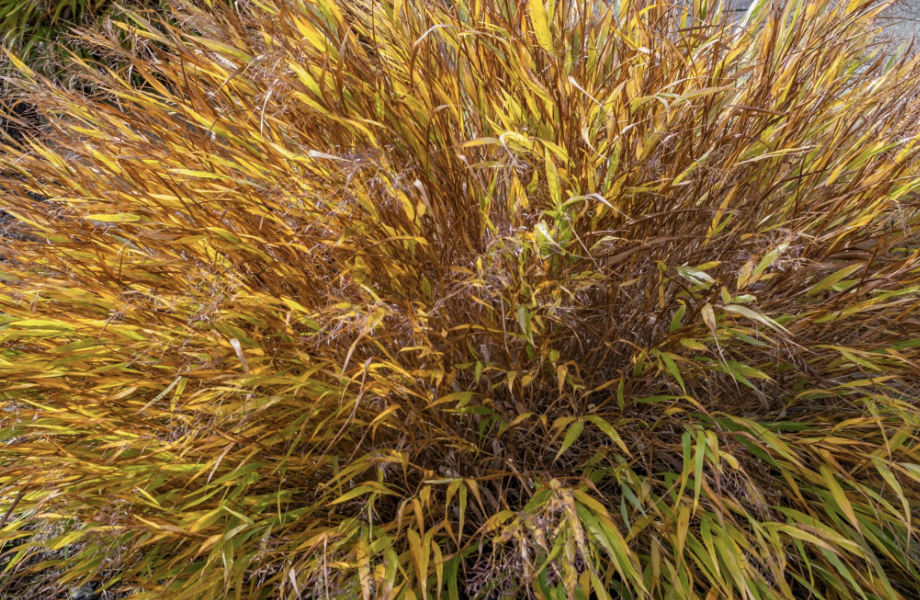
Hakonechloa macra - a clump forming grass that adds so much to a border
10 - Panicum virgatum ‘Shenandoah’
Native background: Switchgrass is native to North American prairies and open grasslands.
Height and spread: Around 90–120cm tall and 60–90cm wide.
Flowering: Airy flowerheads appear in late summer and autumn, then persist through winter.
Sun: Full sun gives the best colour and form.
Soil: Adaptable, but prefers fertile, well-drained soil that retains some moisture.
Drought: Tolerates dry spells once established.
‘Shenandoah’ develops red tones in its foliage from summer into autumn, with fine seedheads held above the clump. Its upright habit makes it useful for adding structure through a border. I’d repeat it in small groups among late-flowering perennials, where the red foliage and winter stems can contrast with pale grasses and seedheads. looks amazing backlit with the low September/ October sunlight.
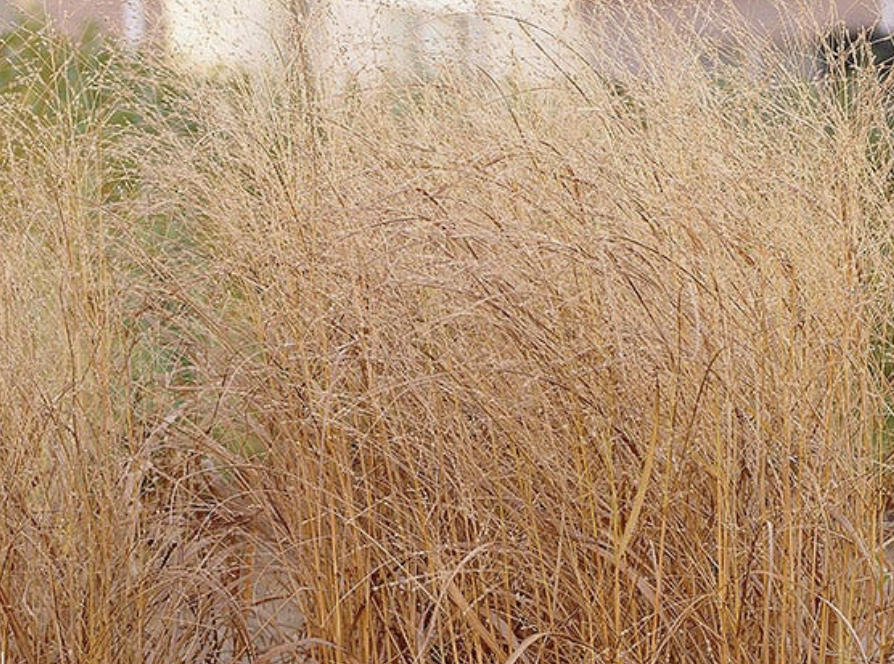
Designing with grasses
Combine a few distinct forms rather than scattering many different grasses through the garden. Upright calamagrostis can provide structure; airy molinia can soften the spaces between; evergreen carex or Anemanthele can keep colour near the ground. Repeat each grass to help the design feel connected.
Choose grasses to suit the site’s sun and soil, and leave deciduous stems standing until late winter or early spring. This extends the winter display and offers wildlife places to shelter. For more ideas, see Designing the Winter Garden and Seedheads That Shine: Designing a Winter Garden with Perennials
Conclusion: a garden with Winter Rhythm
The best winter planting has variety: upright stems, soft plumes, evergreen foliage and seedheads that catch the light. Grasses provide a framework for these elements, helping a border feel connected even when flowers have faded. Choose them for their form and growing conditions as well as their summer display, and the garden can keep moving and changing through winter.